An industrial biology company
Protein,
without the land.
We convert CO₂ and renewable electricity into carbon-negative protein.
Building the production infrastructure that comes after agriculture.
CO₂ + H₂O + e⁻
→ Protein
— 01 / Thesis
The next transition
is food.
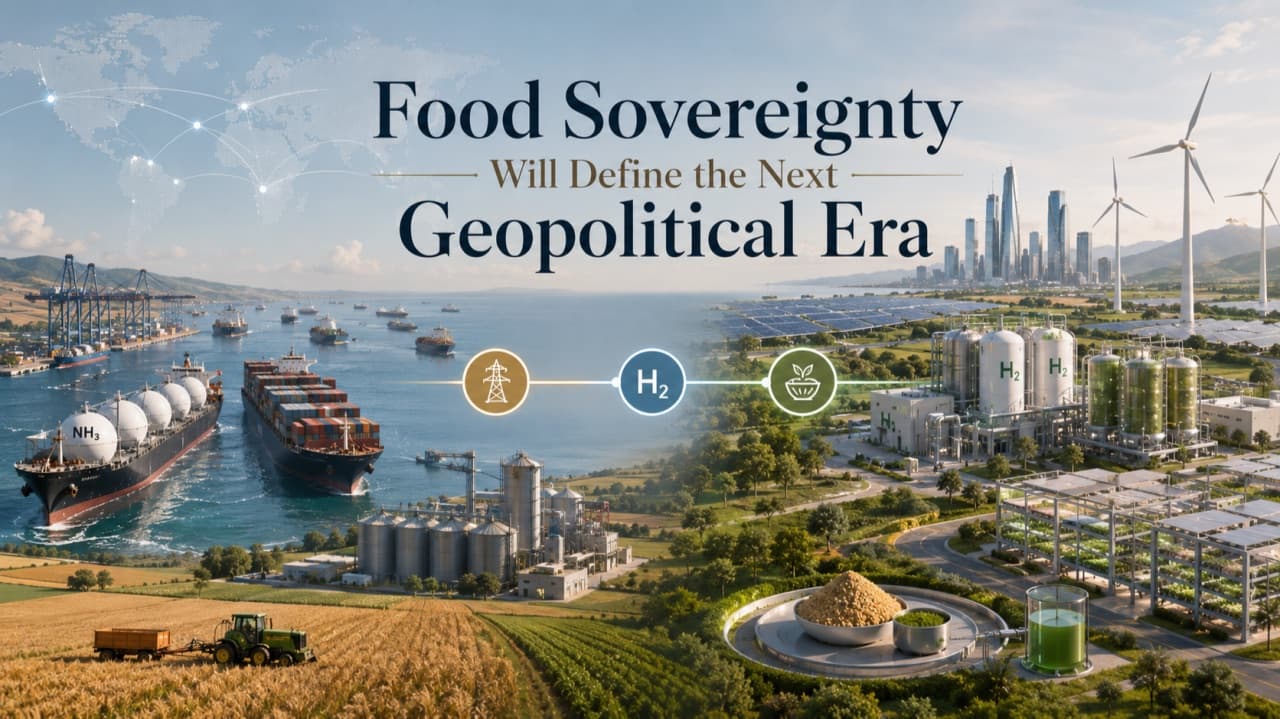
Energy moved from centralized to distributed. Protein will follow the same arc. It is a question of when, not whether.
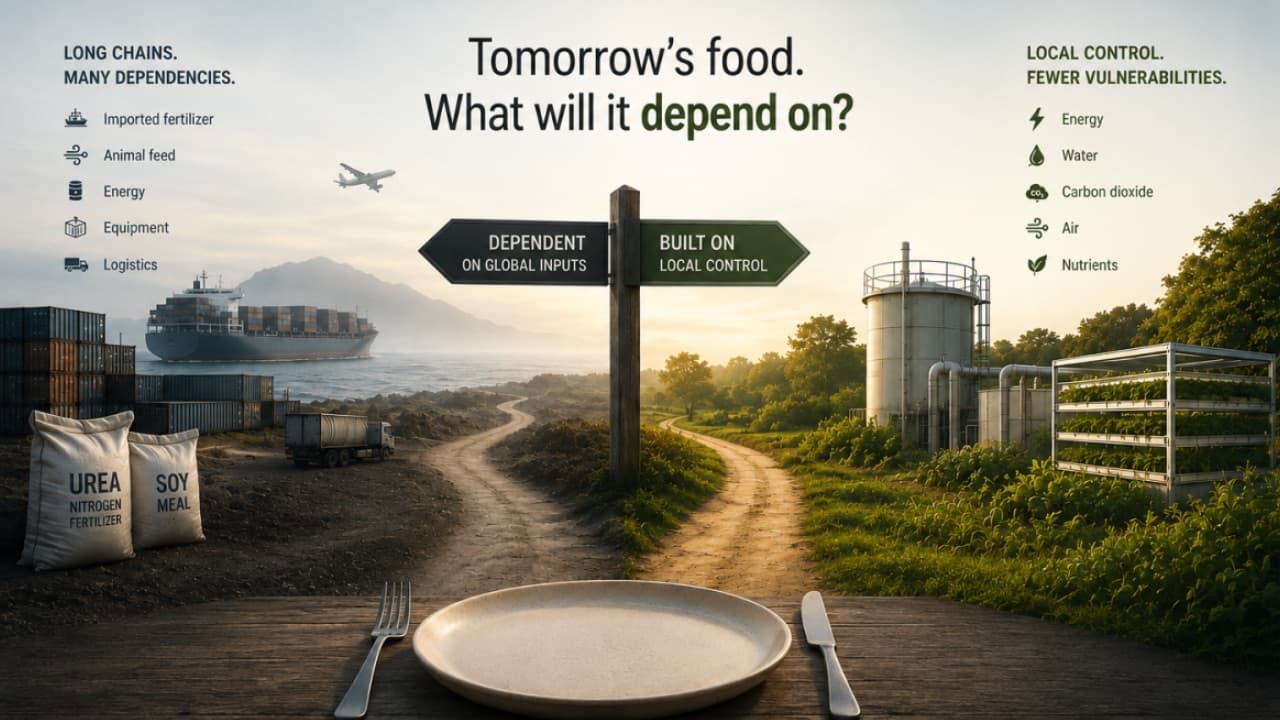
Feed production uses forty percent of the world's arable land. Fishmeal is climate-exposed and shrinking. The supply chain that fed the twentieth century cannot feed the twenty-first at the carbon budget now required.
We decouple protein from agriculture.
Biology, engineered for the task. Inputs that never run out.
— 02 / Approach
A platform.
Not a product.
Our technology converts gaseous inputs into high-quality protein biomass through a continuous biological process. The architecture is modular, climate-resilient, and capital-efficient.
We are not disclosing the specifics of our biology or our deployment model at this stage. Qualified partners and investors can request access under NDA.
— 03 / Team
Built by infrastructure
operators.
CO-FOUNDER & CEO
Product & Commercialization
Over a decade leading complex, infrastructure-heavy products from concept to commercial scale. Experienced in cross-functional execution across engineering, operations, and go-to-market.
CO-FOUNDER & CTO
Systems & Reactor Engineering
Leads experimental implementation: bench-scale reactor design, instrumentation, and test execution. Oversees lab systems, data collection, and iterative reactor development.
Supported by advisors with deep expertise in industrial fermentation and regulatory affairs.
We don't sell protein.
We install production.
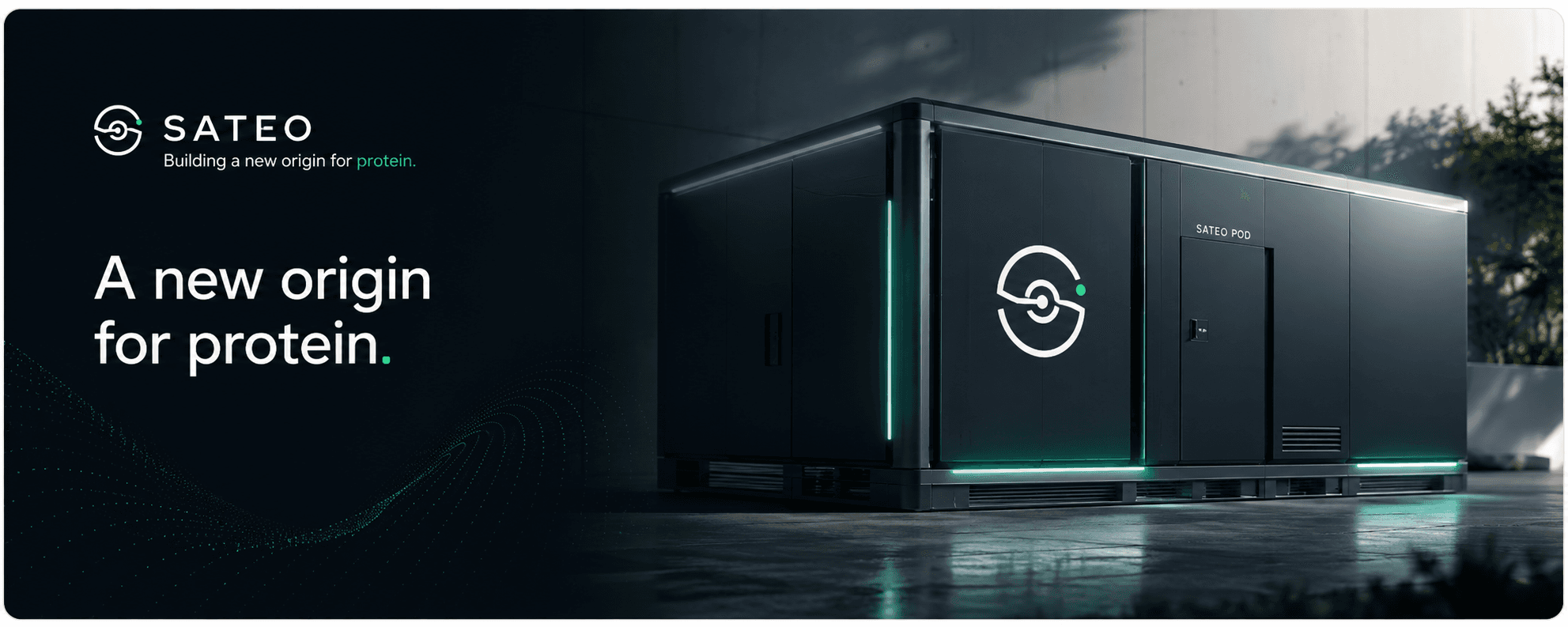
Partner with Sateo to bring modular, carbon-negative protein production on-site.
Get in touchPhase I — Technical Objectives
Proving the
core thesis.
A modular, electrified bioprocessing platform that converts renewable energy and abundant feedstocks into sustainable protein — with no agricultural inputs required.
Core Innovation
Decoupled from constraints.
Conventional protein production is constrained by arable land, fresh water, and fertilizer inputs. Even emerging precision-fermentation approaches often rely on agricultural feedstocks.
Sateo's reactor and control system is engineered from first principles for efficient gas–liquid mass transfer, dynamic process control, and continuous sensor-driven optimization.
Three-Reactor Architecture
Seed Reactor
Maintains stable, healthy culture for continuous operation.
Growth Reactor
Optimized for high-density biomass production and efficient resource utilization.
Conditioning Reactor
Tailors biomass composition and enables recovery of valuable co-products.
Phase I Objectives
— 01
Stable continuous autotrophic cultivation
Design and operate a three-reactor bench system (seed, growth, conditioning). Key tasks: inoculum development, defining operating windows, and demonstrating continuous multi-week operation with sterile gas handling and defined recovery procedures.
— 02
Conversion efficiency and energy intensity
Demonstrate that energy consumption per kg of dry biomass reaches commercially competitive ranges. Measure conversion efficiency, model mass transfer, and generate energy and material balances against techno-economic targets.
— 03
Biomass composition and co-products
Demonstrate biomass reaching target protein content with side-streams directed toward high-value co-products. Vary process conditions and feeding strategies, and characterize product quality via standard analytical methods.
— 04
Integrated sensing and control
Develop automated control logic using inline process sensors and periodic offline analysis. Prototype a control layer to maintain stable, efficient production with cost-effective instrumentation.
Platform Outputs
Protein Production
High-protein microbial biomass for feed applications. Continuous, land-free, carbon-negative by design. Nutrient-rich process streams recoverable as fertilizer.
Biopolymers (PHB)
Biodegradable plastic precursors generated directly from the fermentation process — offering a sustainable alternative to petrochemical plastics through dynamic stoichiometric control.
Future Vision
A new category of carbon-negative protein modules — enabling sustainable production anywhere in the world.
Decentralized Production
Compact, modular systems designed for deployment alongside low-carbon energy infrastructure.
New Market Access
Unlocks markets unserved by centralized plants, offering a cost-competitive, land-light alternative to traditional protein.
Phase I will generate the experimental data required to demonstrate commercial yields and energy efficiency.
Technology
A platform built for
what comes next.
Engineered from first principles for high-yield, carbon-negative bioproduction.
— 01
Integrated bioreactor system
Purpose-built for efficient gas–liquid mass transfer and dynamic process control, enabling high-yield continuous growth with minimal resource input.
— 02
Continuous process optimization
Sensor-driven, real-time monitoring and control algorithms maintain biological stability, maximize yield, and ensure safety — adapting seamlessly to variable inputs.
— 03
Modular, scalable architecture
Compact systems designed for flexible deployment alongside low-carbon energy infrastructure, supporting cost-effective, land-light production for diverse markets.
We are not disclosing the specifics of our biology or deployment model at this stage. Qualified partners and investors can request access under NDA.
Contact
Get in touch.
For partnership inquiries, investor access, or technical collaboration requests.
LOCATION
San Francisco, CA
2261 Market Street STE 95709, 94114